



Order your 8-pack / 12 pack box today
A ready meal’s convenience depends on how you store it after bringing it home. The best way to store ready meals is to cool leftovers promptly, refrigerate chilled portions, and freeze meals carefully. The right approach depends on whether the food is chilled, frozen, or shelf-stable.
It’s easy to focus on cooking time and forget the clock once dinner is served. Simple habits, such as dividing a large portion into shallow containers and labeling them with the date, help you plan without guesswork.
This guide explains how to cool cooked food quickly, store chilled meals safely, and decide whether a thawed meal can be frozen again. You’ll also learn how to read an Enjoy By date alongside the meal’s storage instructions. From a busy weeknight to a portion of fragrant rice and stew, these practical steps help you keep ready meals in good condition until you’re ready to eat.
1. Refreezing previously frozen leftovers
Plan how to use a thawed meal before putting it back in the freezer. Thaw leftovers in the refrigerator, not on the kitchen counter, and keep them covered as they defrost. If you won’t eat the meal soon, freeze it in a fresh, sealed portion rather than repeatedly thawing and refreezing it.
Refreezing can affect texture. Rice may become drier, while beans and vegetables can soften after another freeze and thaw. For the best quality, freeze portions sized for one meal. Label each container with its contents and date, so a portion of stew doesn’t become an unmarked mystery later.
Frozen vegetables, grains, and beans make practical meal components. Pack cooked rice or beans in small portions, and keep vegetables separate if you want to preserve their texture. Cool cooked ingredients promptly before freezing. Leave room in each container for the food to expand, and press excess air from freezer bags.
Storage guidance varies by ready meal, so don’t assume every product can be stored for up to two years. Follow the package instructions and date, which may refer to best quality rather than a safety limit. Keep meals sealed and place older packs where you’ll see them first. A torn wrapper or loose seal can expose food to dry freezer air, affecting its flavor and texture.
For leftovers, choose rigid, airtight containers made from freezer-safe glass or food-grade plastic. A tight lid helps prevent spills and limits exposure to air; shallow containers also help food cool evenly before freezing. Avoid filling a container to the rim, especially with stew or beans.
Reheat frozen prepared meals until they’re steaming hot throughout, including the centre. Follow the package directions, and use a food thermometer to check the middle if you have one. In a microwave, stir rice, vegetables, or stew during heating, then let the meal stand briefly so the heat spreads through the portion.
There isn’t one reheating temperature for every meal in this guide. Use the temperature stated on the packaging, if provided, and make sure the centre is hot as well as the edges. This is especially important for dense meals, such as beans and stew, which can heat unevenly.
After thawing, don’t leave a meal out while deciding what to eat. Take only the portion you need, keep the rest covered and cold, and reheat that serving thoroughly. This simple routine helps preserve flavor and nutrition while making a freezer meal easy to enjoy another day.
When planning how to use a thawed portion, consider how it fits into a balanced meal. One way to build a plate is to fill half with non-starchy vegetables, with a quarter for starchy vegetables, pasta or rice. This gives reheated leftovers a place in the meal instead of making them the only component.
You can add about a cup of starch or whole grains to a balanced meal. Depending on what the leftovers contain, pair them with vegetables and other meal components. Freezing separate portions can make it easier to build a meal around vegetables, grains, or other starchy foods when you’re ready to eat.
2. Cooling food rapidly
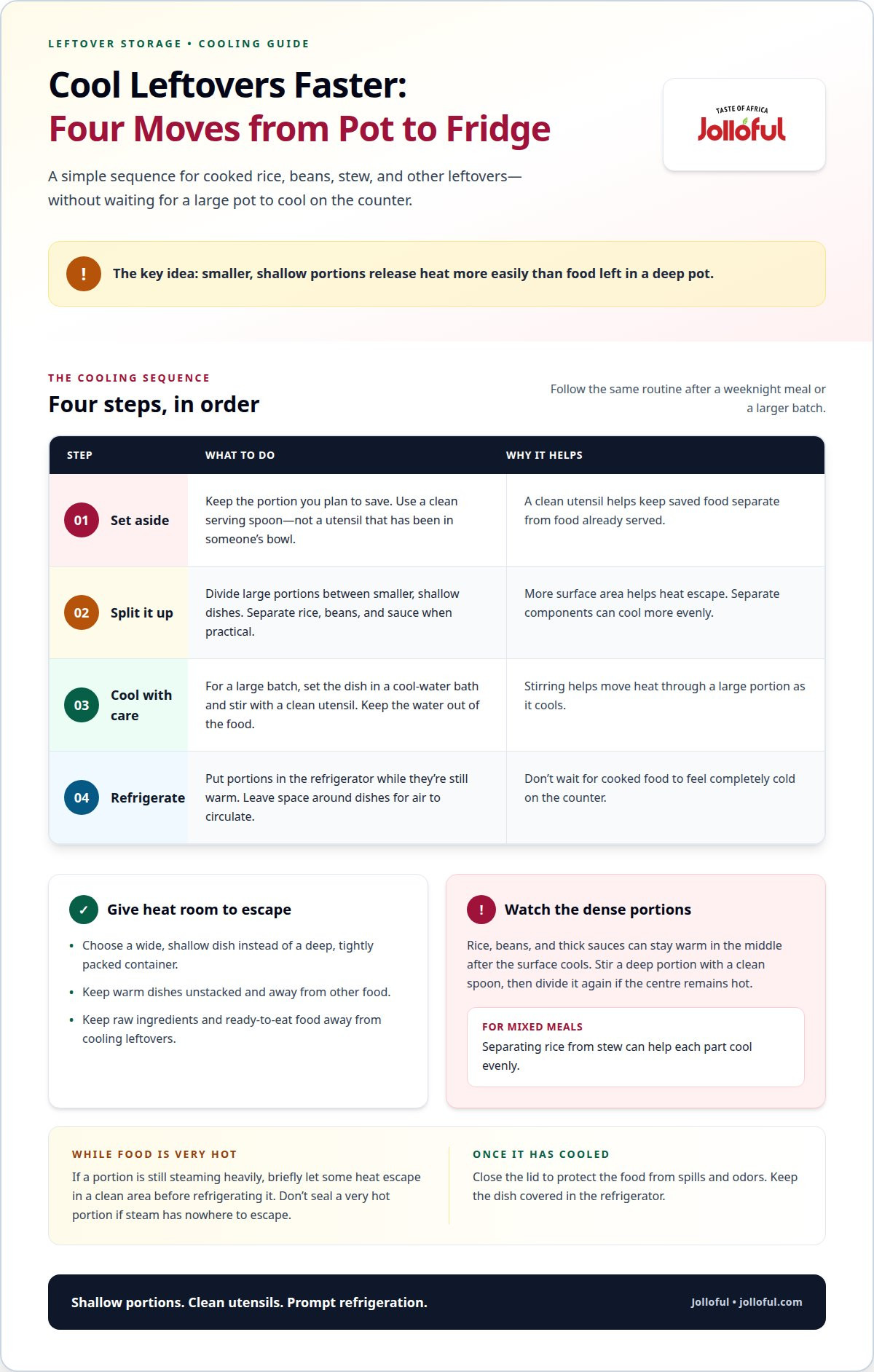
Move cooked food out of a large pot soon after serving. A deep pot of rice or stew holds heat in the centre, so it cools more slowly than smaller portions. Divide leftovers into shallow dishes, keeping rice, beans, and sauce separate when practical.
Use this simple sequence for a weeknight meal:
- Set aside what you’ll keep. Use a clean serving spoon, not a utensil that has been in someone’s bowl.
- Split large portions. Divide a pot of stew or cooked grains between smaller dishes so heat can escape across more surface area.
- Cool with care. For a large batch, place the dish in a cool-water bath and stir the food with a clean utensil. Keep water out of the food.
- Refrigerate promptly. Don’t leave cooked food on the counter until it feels completely cold. Place portions in the refrigerator while they’re still warm, with space around them for air to circulate.
A wide dish cools food more evenly than a deep, tightly packed container. If the portion is still steaming heavily, briefly let some heat escape in a clean area, then refrigerate it. Don’t stack warm dishes or press them against other food, as trapped heat can slow cooling nearby.
Rice, beans, and thick sauces need particular attention because dense food can stay warm inside after the surface cools. Stir a deep portion with a clean spoon, then divide it again if the centre remains hot. For a mixed meal, separating rice from stew also helps each part cool evenly.
Keep raw ingredients and ready-to-eat food away from cooling leftovers. Use a clean shelf and a covered dish, but don’t seal a very hot portion if steam has nowhere to escape. Once the food has cooled, close the lid to protect it from spills and odors.
Cooling food well supports its quality and nutrition. It also helps preserve texture: rice is less likely to clump into a dense block, while vegetables in stew are less likely to soften further from lingering heat. A healthy meal deserves care after cooking, too.
For a convenient meal plan, pair these habits with African ready meal options. Divide any cooked portion you’ll save, cool it promptly, and keep the date visible so it fits neatly into your next meal.
3. Keeping food out of the danger zone
The period between cooking, serving, and chilling needs particular attention. Warm conditions let bacteria grow, and prolonged exposure can affect safety without changing a meal’s smell or flavor. Keep hot dishes hot until serving, and return uneaten portions to cold storage promptly.
At dinner, serve rice, beans, and stew in smaller dishes rather than leaving one large pot on the table. Refill them from the main dish as needed. This limits how much food sits out and keeps the remaining portions away from serving spoons, plates, and hands.
Plan the serving routine before guests arrive. Set out only the food people are ready to eat, and keep the rest covered in the kitchen. If conversation runs long, clear the table and chill leftovers instead of letting a pot of stew linger until everyone has finished.
Hot and cold foods need different handling. Keep a chilled ready meal refrigerated until you prepare it, then follow the package directions for heating. Don’t leave a cold portion on the counter while you prepare other dishes. For a buffet, serve cold items in smaller batches and replenish them from the refrigerator.
- During serving: Use a clean spoon for each dish, and avoid returning food from individual plates to a shared pot.
- After the meal: Separate untouched food from scraps, then cover and chill it.
- For seconds: Take a fresh portion from the stored dish rather than reheating the entire batch.
- For packed lunches: Keep the meal cold during transport and refrigerate it soon after arrival.
Don’t rely on appearance, smell, or taste to judge food that has sat out too long. Bacteria can grow without creating an obvious change. Tasting a spoonful is not a safe test, especially for rice, meat, beans, or sauces that have remained warm.
Repeated warming and cooling can also make food harder to manage. Reheat only the portion you plan to eat, and keep the rest chilled. For example, warm one serving of rice and stew, then return the untouched container to the refrigerator instead of bringing the full batch to the table.
A practical routine protects texture as well as safety. Rice stays less dry when covered, and stew keeps its aroma when sealed after serving. Keep the dining portion modest, the reserve covered, and the route back to refrigeration clear. That way, the meal’s warmth belongs at the table, not in storage.
4. Refrigerating chilled meals
For cooked leftovers in Germany, cool them promptly, refrigerate them covered, and eat them within a few days. Chilled ready meals also keep for only a few days under refrigeration, so follow the package’s storage instructions and Enjoy By date. For unopened meals, the best way to store ready meals is to follow the label’s temperature and date guidance.
First, check whether a meal is sold chilled or frozen. Put a chilled tray of rice, beans, or stew in the refrigerator when you bring it home. Keep it in its original sealed packaging until opening, unless the label says otherwise.
After opening, transfer leftovers to a clean container with a close-fitting lid. Mark the opening date, then place the container where it won’t get buried behind other food. A clear label helps you use the oldest portion first, especially when several ingredients share the same shelf.
Use these steps to manage an opened chilled meal:
- Read the label. Follow its storage instructions and Enjoy By date before opening the pack.
- Separate portions. Put only the amount you plan to eat on your plate, keeping the rest covered.
- Seal leftovers. Close the original pack securely or use a clean airtight container.
- Plan the next meal. Use the refrigerated portion within a few days, rather than saving it indefinitely.
Keep raw ingredients away from ready-to-eat meals. Store a sealed chilled tray above raw meat or fish, where leaks can’t drip onto it. Clean spills promptly, and use a fresh utensil each time you serve rice, vegetables, or stew from a shared container.
The refrigerator door warms each time it opens, so choose a stable shelf for a meal you’ll keep. Avoid packing containers tightly together; space around them helps cold air circulate. A covered portion of stew is also protected from strong odors, preserving its aroma and flavor.
Packaging dates guide different decisions. An Enjoy By date helps you decide when to eat an unopened meal; it doesn’t extend the storage period after opening. Once opened, follow the package’s instructions and use your marked date to plan when to eat it. If the seal is damaged or the meal has been kept outside refrigeration, don’t rely on the printed date alone.
Good storage habits make meal planning easier. Place the meal with the earliest date where it’s easy to see, and keep sealed packs behind it. This simple routine keeps the fridge orderly and makes the next serving easier to plan.
5. Using the Enjoy By date to decide when to eat meals
An Enjoy By date helps you plan when to eat a ready meal, provided it has been stored as directed. Keep the package sealed and refrigerated when required, then use the printed date as your guide. Chilled ready meals keep for only a few days under refrigeration, so don’t treat the date as a reason to extend their storage.
Check the storage instructions when you bring the meal home. A chilled tray belongs in the refrigerator; a frozen pack belongs in the freezer. If a meal has been left unrefrigerated or its packaging is damaged, the printed date alone can’t tell you whether it remained in good condition.
Once opened, note the date and time on the container, and follow any after-opening directions on the package. The original Enjoy By date still matters, but opening the pack doesn’t reset it or extend the meal’s safe storage period. Use opened portions promptly and keep them covered between servings.
For cooked leftovers, divide a large batch into single-serving portions before storing. Write the food name and preparation date on each container, such as “rice and stew, cooked Monday.” This makes it easier to identify the meal, serve the amount you need, and use older portions first.
- Keep the label visible. Face the date outward in the refrigerator or freezer.
- Include the food name. “Beans and stew” is clearer than “leftovers.”
- Separate serving sizes. Store lunch portions apart from a larger family portion.
- Update opened packs. Add the opening date without covering package instructions.
Discard a meal if its container is leaking, swollen, badly damaged, or no longer sealed. A sour or unusual smell, visible mould, or an unexpected change in appearance also signals that it shouldn’t be eaten. Don’t taste food to test it, and don’t assume a normal smell proves it’s safe if its storage history is uncertain.
For example, if you open a chilled meal on Tuesday, mark the container Tuesday and follow its storage directions and Enjoy By date. If you divide cooked stew into portions, label each one separately. These small steps make the next serving easier to plan and help prevent forgotten containers from lingering in the fridge.
Use the package date together with the storage history, not instead of it. A correctly stored, sealed meal and an opened portion are different situations; the label and your notes help you tell them apart. When organizing several meals, place the earliest date where it’s easy to see.
Jolloful
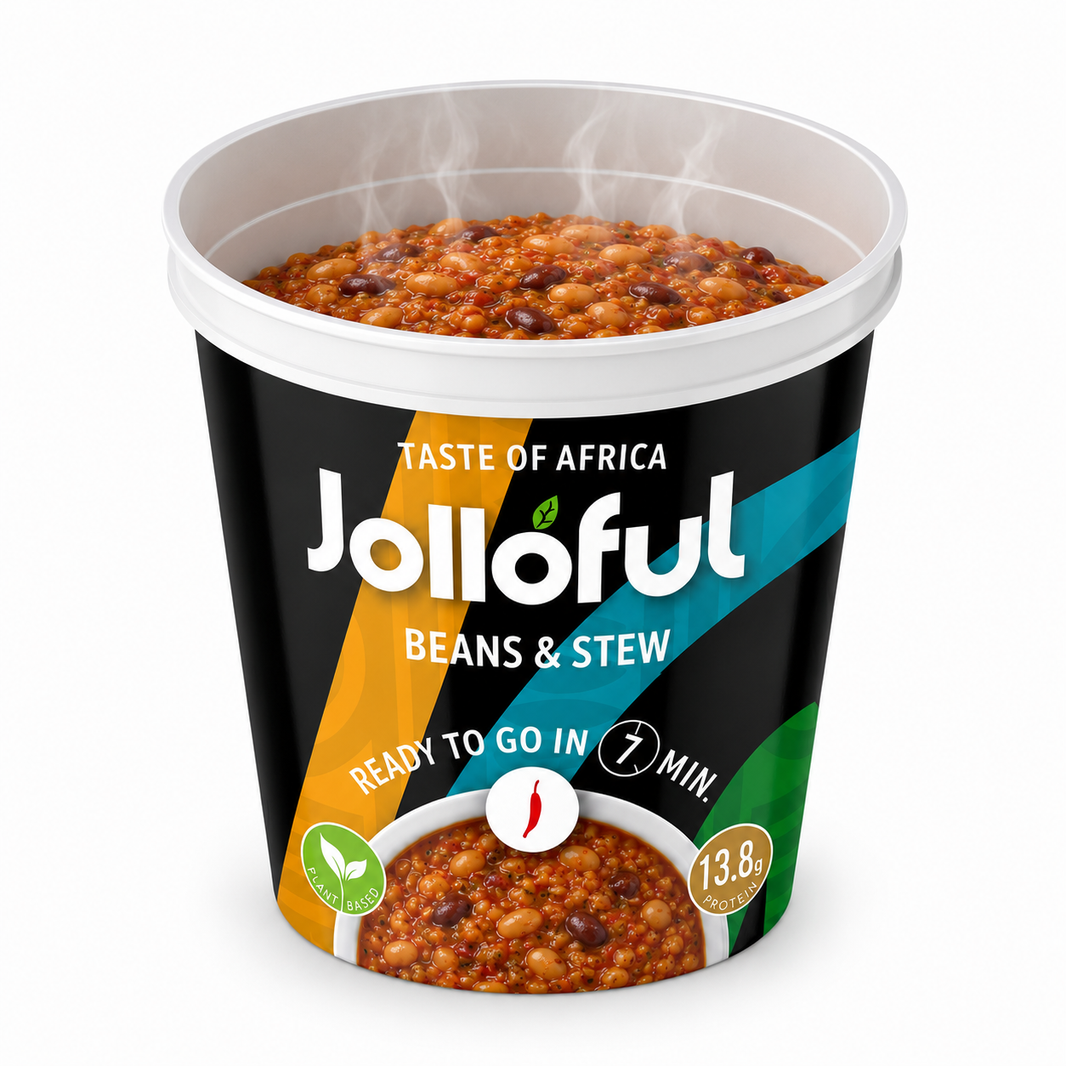
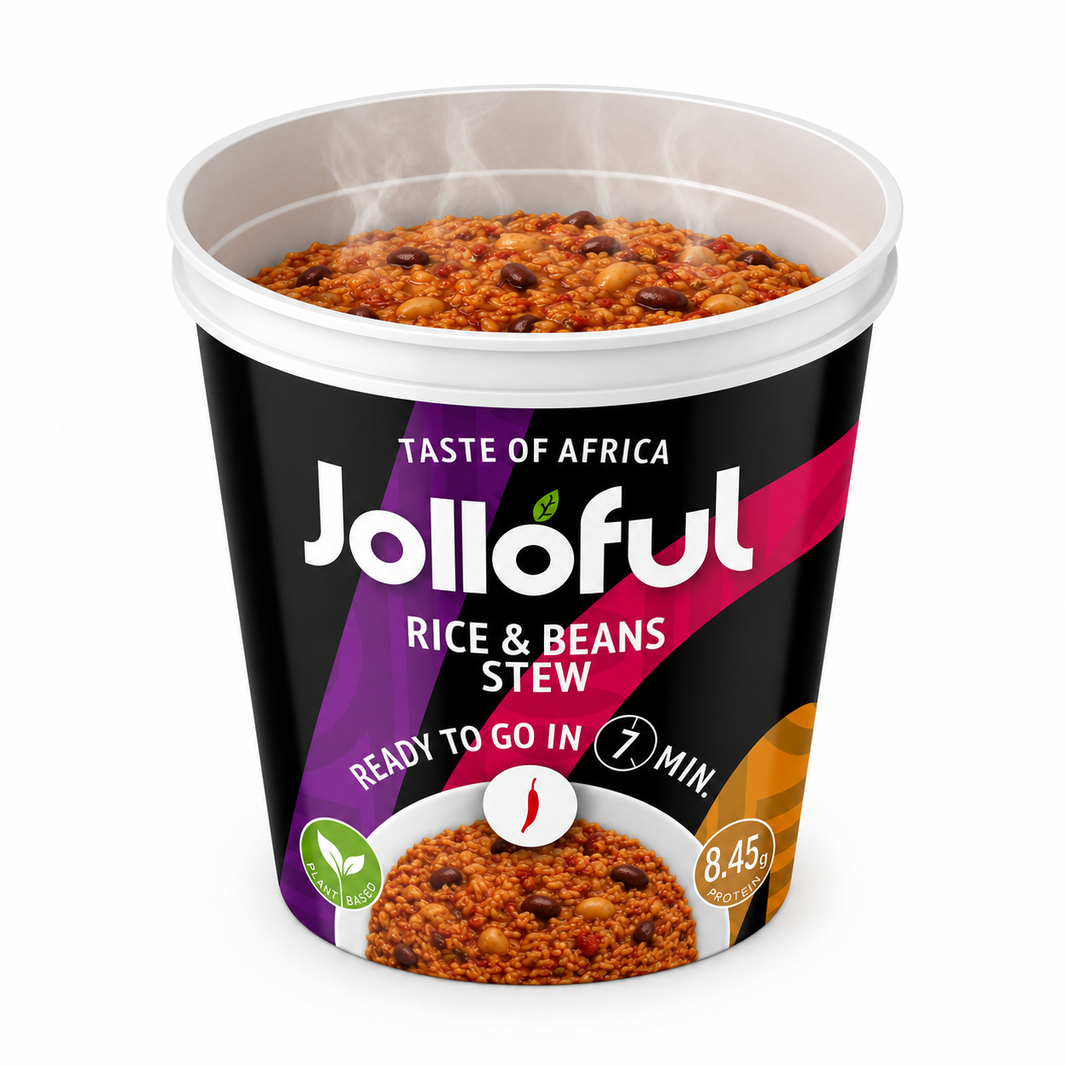
Jolloful makes it easier to enjoy African meals while keeping storage decisions simple. Its ready-to-eat meals bring familiar West African flavors to busy days, with options including White Rice and stew (Mild), White Rice, beans and stew, Beans and stew, and White Rice and Stew (Spicy).
For safe storage, follow the instructions printed on each package and check its date before eating. Once opened, handle any remaining portion according to the label’s guidance. This connects the practical advice in this guide to the meal in front of you.
For a convenient meal with the warmth of African cooking, choose Jolloful when ready-to-eat food suits your day. Contact Jolloful with your questions.
Make your next meal easier to plan
A little care with storage can make kitchen routines calmer. Set aside portions with your next meal in mind, so a ready meal fits around work, family plans, or a quiet evening at home. The best way to store ready meals is to follow a routine consistently: use the package directions, keep dates easy to see, and make storage part of putting food away.
That same planning can make room for more variety at the table. Familiar rice and stew can bring warmth and spice to a busy day, while a different portion can add a new taste to your week. Choose meals that suit your appetite and schedule, then enjoy them with confidence in how you handle them at home.
Make your next meal simple, satisfying, and full of flavor.
Frequently Asked Questions
How long can cooked ready meals be stored in the fridge at 4°C?
Chilled ready meals keep for only a few days in the refrigerator. Use the package’s Enjoy By date and storage instructions as your guide, and eat opened portions promptly. The date doesn’t extend the storage period after opening. If you’ve divided a cooked meal into containers, label each one with its contents and preparation date to help decide which serving to eat first.
How long can ready meals be kept in the freezer at −18°C?
Freezer storage times vary by product, so follow the package date and instructions for each meal. A meal may remain safe for longer if kept continuously frozen, but its quality can decline; the best-quality period depends on the product. Keep the pack sealed and protect it from damage. For homemade meals, note the food and freezing date on the container. This makes it easier to identify older portions and choose one for your next meal.
What is the safest way to cool and refrigerate freshly cooked meals?
Divide freshly cooked food into smaller portions, then refrigerate it promptly in clean containers. For a mixed meal, keep components such as rice and stew separate when practical. Use a lid to protect the food from spills and odors, and avoid stacking warm containers tightly together. Label each portion with its contents and preparation date so it’s easy to manage later.
What is the safest way to thaw frozen ready meals?
Thaw a frozen meal in the refrigerator, keeping it covered and contained to catch any liquid. A leakproof dish under the package helps protect other food. Follow the meal’s preparation instructions after thawing, and reheat it thoroughly before serving. If the package gives directions for cooking from frozen, follow those instead of thawing it first.
Is it safe to refreeze a thawed ready meal?
For the simplest routine, thaw only the portion you plan to eat and avoid repeated freeze-thaw cycles. They can affect texture, leaving rice drier and vegetables softer. If a meal has thawed, keep it covered and cold while planning when to eat it. Next time, freeze separate servings so you can take out only what you need.


Hinterlasse einen Kommentar