







Order your 8-pack / 12 pack box today
Ghanaian food’s warmth comes from more than spice. It reflects local ingredients and the pleasure of sharing a meal. Bring the authentic taste of Ghana at home with familiar staples, aromatic soups, grilled foods and shito’s bright, peppery kick.
That variety reflects Ghana’s coastal, forest and savanna landscapes. Meals often pair starch-based staples with rich soups or stews and grilled proteins, making the table feel generous and satisfying. Jollof rice offers another way to explore Ghanaian flavors: rice simmered with tomatoes, onions, peppers and ginger, with spices adding depth and warmth.
If you love the idea of Ghanaian cooking but aren’t sure where to begin, start with its heritage and the way people gather around food. This article explores communal dining, the ingredients behind Ghanaian jollof rice and beloved dishes to make at home. Find practical inspiration for building flavor and bringing more Ghanaian food culture to your table.
1. Ghanaian culinary heritage and communal dining
Ghanaian cooking reflects the country’s coastal, forest and savanna landscapes. Across these food traditions, meals commonly pair starch-based staples with aromatic soups, grilled proteins and shito, a pepper sauce. Cassava, maize and plantains appear in traditional cooking, often alongside richly seasoned stews. The result is a table built around contrasting textures: soft staples, hearty sauces and smoky grilled fish or meat.
For deep Ghanaian flavor, build a seasoning base with tomatoes, onions, peppers, ginger, garlic and spices. Simmering them together develops the rich sauce used in dishes such as Ghanaian jollof rice, while grilling adds a smoky edge. Shito brings a punchy pepper note to the plate. Adjust the pepper to suit your guests while keeping the dish lively and balanced.
A sturdy pot works well for simmering stews and rice. Use a mortar and pestle to crush ingredients by hand, or a blender to make a smooth seasoning base. For charcoal-grilled fish, use an outdoor grill where possible, or cook it under a kitchen grill or in a grill pan. These tools let you reproduce key techniques without specialist equipment.
In a German kitchen, preserve the dish’s core ingredients and method rather than chasing an exact local setup. Use a regular hob and heavy pot to simmer sauces gently, adjusting the heat so the base doesn’t catch. If charcoal grilling isn’t practical, a grill pan can brown the food. Keep Ghanaian flavors clear with peppers, ginger, garlic and onions instead of unrelated spices.
Communal dining gives these dishes their social rhythm. Set a shared bowl of stew or soup at the centre, with rice or another staple beside it, so everyone can build a plate. Grilled fish with banku is a Ghanaian pairing, and shito can add extra heat at the table. For a relaxed home meal, serve everything family-style and let each person choose their preferred combination.
Ghanaian food ranges from everyday meals to street-food favorites. Waakye combines rice and black-eyed beans, while kelewele is made from spice-rubbed plantain chunks fried until golden. These dishes show how staples, spice and texture shape a meal. At home, choose one dish and give its sauce time to simmer; that simple step brings aromatic depth to the table.
2. Jollof rice and its ingredients
Ghanaian jollof rice combines rice with a deeply flavored tomato base. Familiar ingredients include long-grain rice, tomatoes, onions, peppers, ginger, garlic and spices. As the sauce simmers, the ingredients soften and mingle, creating a fragrant base that colors and seasons the grains.
Start by blending or finely chopping tomatoes, onions, peppers, ginger and garlic. Cook the mixture until it thickens and its raw aroma fades, then stir in spices. Add rice and enough liquid for the grains to cook in the seasoned sauce. Keep the heat controlled and stir as needed to stop the bottom from scorching while the rice softens.
Balance matters more than adding every spice in the cupboard. Tomatoes bring tang and body, onions add sweetness, and ginger and garlic give the sauce warmth. Adjust the pepper to suit your table. A well-cooked base should taste rounded before the rice goes in, not sharply raw or dominated by chilli.
Ghana, Nigeria and Senegal each have their own take on jollof rice. The shared name refers to a family of dishes, not one identical recipe. For a Ghanaian-style plate, serve the rice with chicken, beef or fried plantains. The savory sauce, tender grains and sweet plantain make a satisfying contrast.
In Germany, ingredient costs depend on what you buy and where you shop. Rice variety, fresh tomatoes and peppers, and your choice of meat or plantain all affect the total. Seasonal produce and pantry staples can shape the cost of a home-cooked meal without changing its core flavor.
For safe preparation, rinse fresh produce under clean running water and keep raw meat separate from ready-to-eat ingredients. Cook chicken or beef thoroughly, and refrigerate leftovers promptly in a covered container.
German kitchens can handle this dish with a blender, a heavy pot and a regular hob. If fresh tomatoes lack flavor, use a tomato product as part of the base, then build depth with onion, ginger, garlic and peppers. Keep the rice-to-sauce balance steady; adding too much liquid can leave the grains soft rather than distinct. For more everyday rice-and-stew inspiration, explore African rice and stew meals.
Serve jollof rice hot, with accompaniments arranged separately so everyone can choose what goes on their plate. Fried plantains add sweetness, while grilled chicken or beef makes the meal heartier. This flexible serving style keeps the tomato-and-spice character at the centre, whether you’re having a quiet dinner or sharing a meal with guests.
3. What are the most popular authentic Ghanaian dishes to make at home?
Ghanaian home cooking offers many ways to create a memorable meal. Rice, beans, cassava, maize and plantain each bring a different texture, while soups, stews and pepper seasonings build depth. These dishes offer practical inspiration for the authentic taste of Ghana at home, from a filling one-pot meal to a crisp snack.
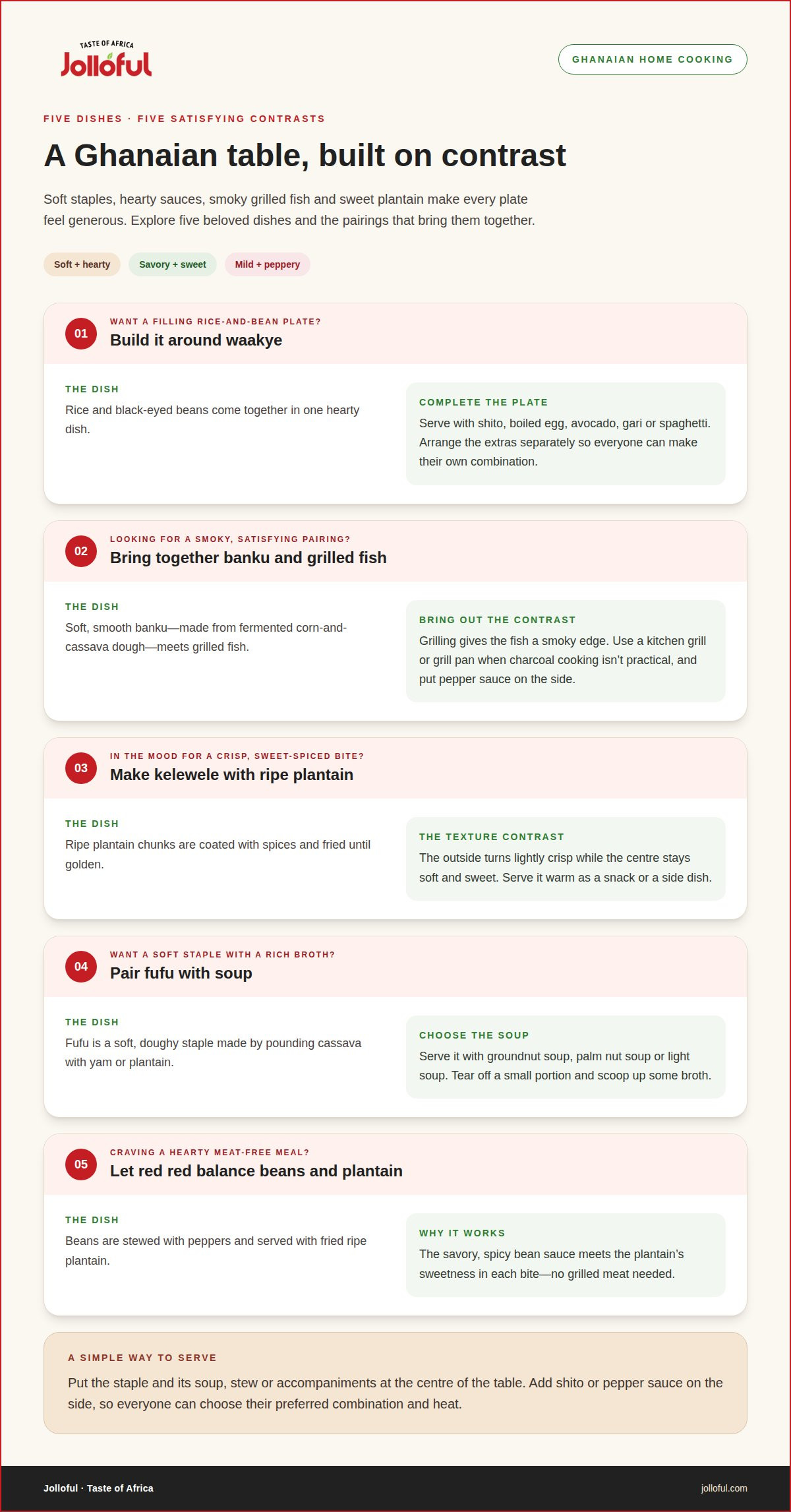
Waakye combines rice and black-eyed beans in one hearty dish. Serve it with shito, boiled egg, avocado, gari or spaghetti for a mix of soft, creamy and crunchy textures. Prepare the rice and beans together, then arrange the accompaniments separately so everyone can shape a plate to suit their taste.
Banku with grilled fish pairs fermented corn-and-cassava dough with charcoal-grilled fish. The dough is soft and smooth, while grilling gives the fish a smoky edge. A kitchen grill or grill pan can brown the fish when charcoal cooking isn’t practical. Serve the components together, with pepper sauce on the side for guests who want more heat.
Kelewele turns ripe plantain into a savory snack. Cut it into chunks, coat them with spices, then fry until golden. The outside becomes lightly crisp while the centre stays soft and sweet. Kelewele is popular at night markets in Accra and Kumasi, and also works as a warm side dish at home.
Fufu with soup is a classic combination built around contrasting textures and a rich, spoonable broth. Fufu is pounded cassava with yam or plantain, shaped into a soft, doughy staple. Pair it with groundnut soup, palm nut soup or light soup. Tear off a small portion, shape it with your fingers and scoop up some soup.
Red red brings beans and ripe plantain together in a comforting meal. The beans are stewed with peppers and served with fried plantain. Their savory, spicy sauce meets the plantain’s sweetness in each bite. It’s a satisfying option when you want a hearty meal without grilled meat.
Suya is skewered meat coated in a dry peanut-spice rub, then grilled and served with sliced onions and tomatoes. It originated in Nigeria and is also part of Ghana’s street-food scene, especially in Tamale and Accra. For a home version, keep the meat’s spice coating central and serve the onions and tomatoes alongside.
Choose a dish to suit the occasion: waakye for a customizable plate, kelewele for a snack, or fufu and soup for a hands-on meal. Each highlights a different Ghanaian pairing of staple, seasoning and texture.
4. What ingredients are essential for authentic Ghanaian cooking?
Ghanaian cooking starts with ingredients that bring substance, aroma and contrast. Cassava, maize and plantains are key staples, often served with rich stews. Rice and beans also feature in dishes such as waakye. Together, these ingredients provide a foundation for sauces, soups and boldly seasoned meals.
Think in layers when gathering ingredients. A staple provides body; tomatoes, onions and peppers create a savory foundation; ginger and garlic bring warmth. Plantain adds sweetness beside a peppery stew, while beans make a meal hearty. Each ingredient has a role, so a thoughtful combination matters more than a crowded spice shelf.
For a practical pantry, start with ingredients that work across several dishes:
- Cassava and maize support staples such as banku and fufu.
- Plantains work in dishes such as kelewele and red red.
- Rice and beans form the base of waakye.
- Tomatoes, onions, peppers, ginger and garlic build a fragrant sauce base.
- Shito adds a distinct peppery finish at the table.
In Germany, fresh ingredients and pantry goods may come from different shopping trips. Choose ripe plantains for sweeter dishes, and firmer ones when you want them to hold their shape during cooking. Pick tomatoes with a ripe aroma for sauces. If fresh peppers vary in heat, add them gradually and taste the sauce as it simmers.
Let the dish guide your choices. Stew benefits from a generous base of tomatoes and onions, while ginger and garlic add aromatic depth. For kelewele, ripe plantain and spices create a sweet-savory contrast. In red red, beans and peppers bring richness and warmth, balanced by fried plantain.
Some ingredients need preparation before they go in the pot. Peel cassava and plantain carefully, then cut them to suit the recipe. Mash or pound cooked staples when you need a smooth, cohesive texture. For sauces, chop or blend aromatics before cooking so they soften evenly and distribute throughout the dish.
If a specialty ingredient is hard to find, keep the dish’s main structure intact instead of swapping several ingredients at once. A substitute may make a recipe easier to cook in a German kitchen, but it can change the flavor or texture. Preserve the central staple, seasoning base and serving style, adapting only what your kitchen requires.
A small, well-chosen collection goes a long way. Cassava, maize, plantain, beans, rice and familiar aromatics can support several Ghanaian meals. Start with one recipe, learn how its ingredients work together, and build your pantry around dishes you enjoy cooking.
Makola Market in Accra offers visitors a place to explore Ghanaian ingredients and street food. The experience can connect ingredient choices to the dishes they support: notice the familiar staples and aromatics, and consider how they come together in a meal. Street food also lets you encounter Ghanaian cooking as prepared dishes, not just a collection of ingredients. Keep the focus on the flavors and combinations you want to recreate at home.
5. What are good substitutes in Germany for hard-to-find Ghanaian ingredients?
Some Ghanaian ingredients have no exact replacement because their flavor or texture defines a dish. In a German kitchen, focus on each ingredient’s role. A substitute can help recreate the dish’s balance, but the result won’t be identical. Keep the main staple and seasoning style intact, adapting only the ingredient that’s difficult to find.
For fresh tomatoes in stews, canned tomatoes can provide a useful base. Cook them with onions, ginger, garlic and peppers until the sauce thickens and loses its raw edge. Add fresh tomato if you have it, or thin the sauce with water if it becomes too concentrated. This approach suits tomato-based stews and jollof rice while keeping the aromatic base familiar.
Plantains can be harder to find than everyday German fruit. If you find frozen plantain, use it in cooked dishes and follow the package directions. Ripe bananas may work in a pinch for a sweet side, but they soften more quickly and taste different. For kelewele, the result won’t have plantain’s firm texture, even with a similar spice coating.
Cassava and maize need careful substitution because they shape the texture of staples such as fufu and banku. With soup, smooth mashed potato can provide a soft, scoopable accompaniment, but it won’t reproduce the flavor of pounded cassava, yam or fermented corn-and-cassava dough. Treat it as a practical pairing, not an equivalent ingredient.
Gari adds a dry, crumbly texture to waakye. If it’s unavailable, leave it out rather than adding a large amount of another topping. Toasted breadcrumbs can offer some crunch, though their flavor differs. Keep other accompaniments, such as beans, egg or avocado, so the plate still has varied textures and a satisfying mix.
Shito has a distinctive peppery character, so no everyday condiment fully replaces it. Chilli sauce can add heat at the table, but it won’t deliver shito’s particular flavor. Serve a little on the side and let each person adjust their plate. This keeps the main dish balanced for guests with different spice preferences.
Use this simple substitution check before cooking:
- Match the role: choose a replacement for texture, sweetness, body or heat.
- Change one ingredient: keep the rest of the recipe recognizable.
- Taste as you cook: adjust pepper, salt and liquid gradually.
- Describe the change: tell guests when a substitute changes the dish’s texture or flavor.
These adjustments help you cook with ingredients available in Germany while respecting the character of Ghanaian dishes. If you’d rather enjoy a prepared African meal, it can complement your own cooking experiments.
Jolloful
After exploring Ghanaian ingredients and dishes, Jolloful offers a convenient way to enjoy African-inspired meals at home in Germany. Its options include White Rice and stew (Plus), White Rice, beans and stew, Beans and stew, and White Rice and Stew (Spicy). They bring comforting rice, beans and savory stew to the table when you want a prepared meal instead of cooking from scratch.
These dishes aren’t Ghanaian jollof rice, but they can complement your interest in African food and home-style flavors. Choose a mild or spicy stew option to suit your preference, or add beans for a heartier plate.
Contact Jolloful to talk about its meals.
Bring Ghanaian food culture to your table
Let curiosity shape your next meal. Try a Ghanaian dish you haven’t made before, or invite friends to share flavors you already enjoy. The authentic taste of Ghana at home can become a personal tradition, one thoughtful meal at a time.
Food heritage lives in the choices made around the table: what you cook, how you season it and who shares it with you. Keep exploring at your own pace, and let each meal introduce another ingredient or cooking idea.
May your next shared meal bring warmth, discovery and a fresh appreciation for Ghanaian food culture.
Frequently Asked Questions
How do you make Ghanaian jollof rice authentically, step by step?
Use a Ghanaian recipe as your guide, then pay attention to the rice’s texture and the sauce’s depth.
- Prepare the rice and sauce ingredients according to your chosen recipe.
- Cook the sauce until its flavor tastes rounded, not sharp.
- Add the rice and cook until the grains are tender but still distinct.
- Taste before serving and adjust seasoning gently.
- Serve with accompaniments separately, so everyone can build a plate to their liking.


Leave a comment